
For lifelong Riverhead resident, John Weiss, he knew breast cancer was a part of his family's history, but he never knew it could also be a warning about his own cancer risk.
In 2016, while attending nursing school at Stony Brook University, John’s daughter learned about BRCA1 and BRCA2, genes that can carry inherited mutations passed down through families and increase the risk of breast cancer and other cancers. She encouraged her father to consider genetic testing, particularly given their family history. John’s mother, Paulette, was diagnosed with breast cancer in 1987 and passed away at 41 years old. John and his daughter decided to get tested together and learn if the genetic mutation had been passed down to them — both tested positive for the BRCA1 gene in 2016.
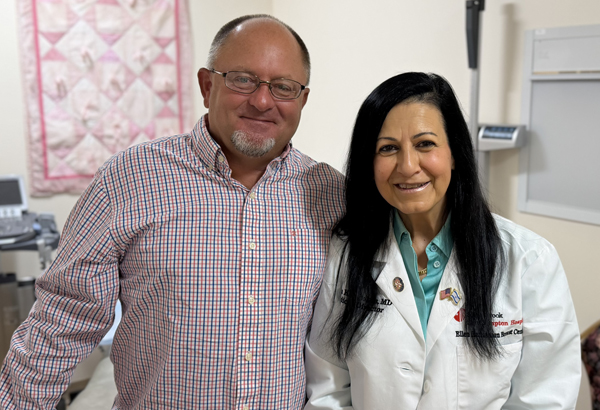
Since learning this information, John has made annual cancer screenings a priority, seeing Dr. Edna Kapenhas, Medical Director of Stony Brook Southampton Hospital’s Ellen Hermanson Breast Center, for routine screening and annual mammograms.
“Taking the test and finding out we are positive for the BRCA1 gene has given my daughter and me the opportunity for early detection and education,” said John. “With this information and routine screenings, we hope this will help protect us and encourage others to get tested.”
For men like John who carry an inherited BRCA1 variant, regular breast cancer screening is especially important. “While fewer than one percent of men in the general population get breast cancer, that percentage increases to roughly one to five percent for men who have inherited the BRCA1 variant,” said Dr. Kapenhas. “Continuity of yearly screening remains the most important part of John’s care routine.”
For John, that knowledge has brought something just as valuable as early detection: a sense of security in uncertainty. “The short time that it takes for me to be screened each year with Dr. Kapenhas gives me peace of mind.”
John hopes sharing his experience will encourage other men and women to learn about their family history and understand their own cancer risk.
“I would be surprised if any man knows that they are at risk for breast cancer or other types of cancer because of their family’s history. I certainly didn’t and wouldn’t have known if it weren’t for my daughter.”
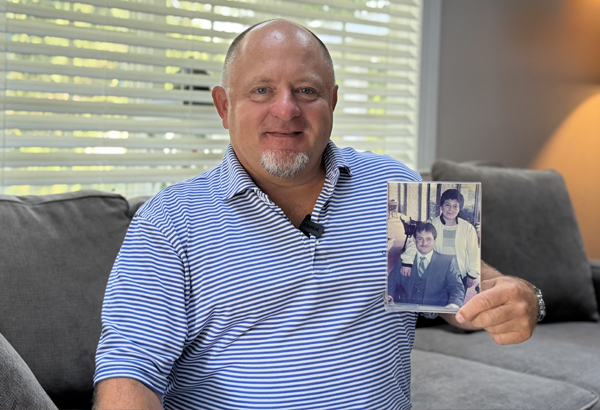
For John, knowing his risk means taking action and giving himself the best possible chance to detect cancer early. “Living in Riverhead, I choose to go to Stony Brook Southampton Hospital’s Breast Center to receive my care with Dr. Kapenhas. I know I'm in good hands."
Knowing your family history, understanding your genetic risk and staying up to date with recommended screenings can help detect cancer early and save lives.
For more information about the Ellen Hermanson Breast Center at Stony Brook Southampton Hospital, please call (631)726-8466 or visit southampton.stonybrookmedicine.edu/services/breast-center.